
Stations (2024-2026)
Fourteen hand-embroidered silk paintings exploring matrescence, identity, autonomy and the cultural expectation of maternal sacrifice.

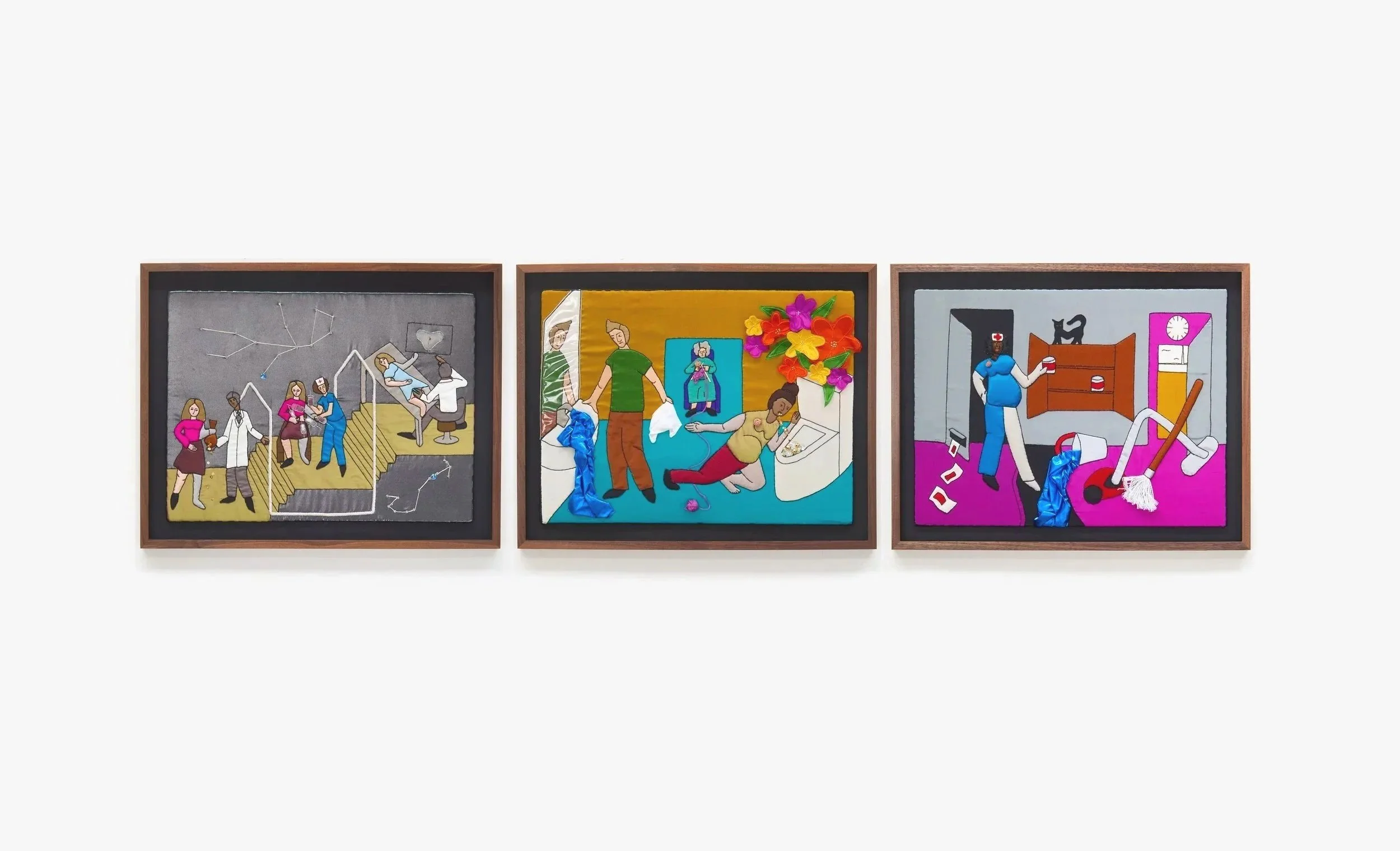
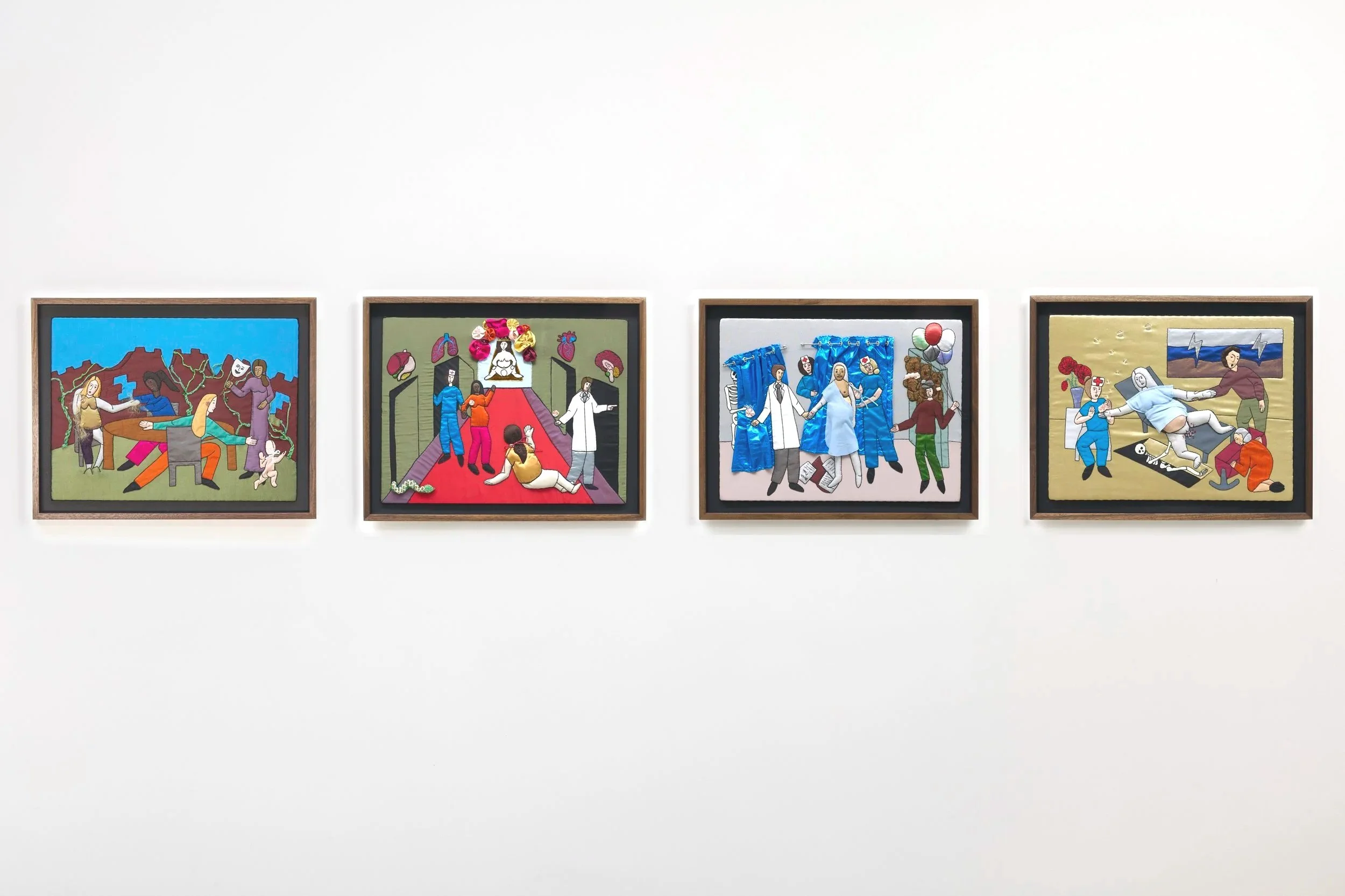
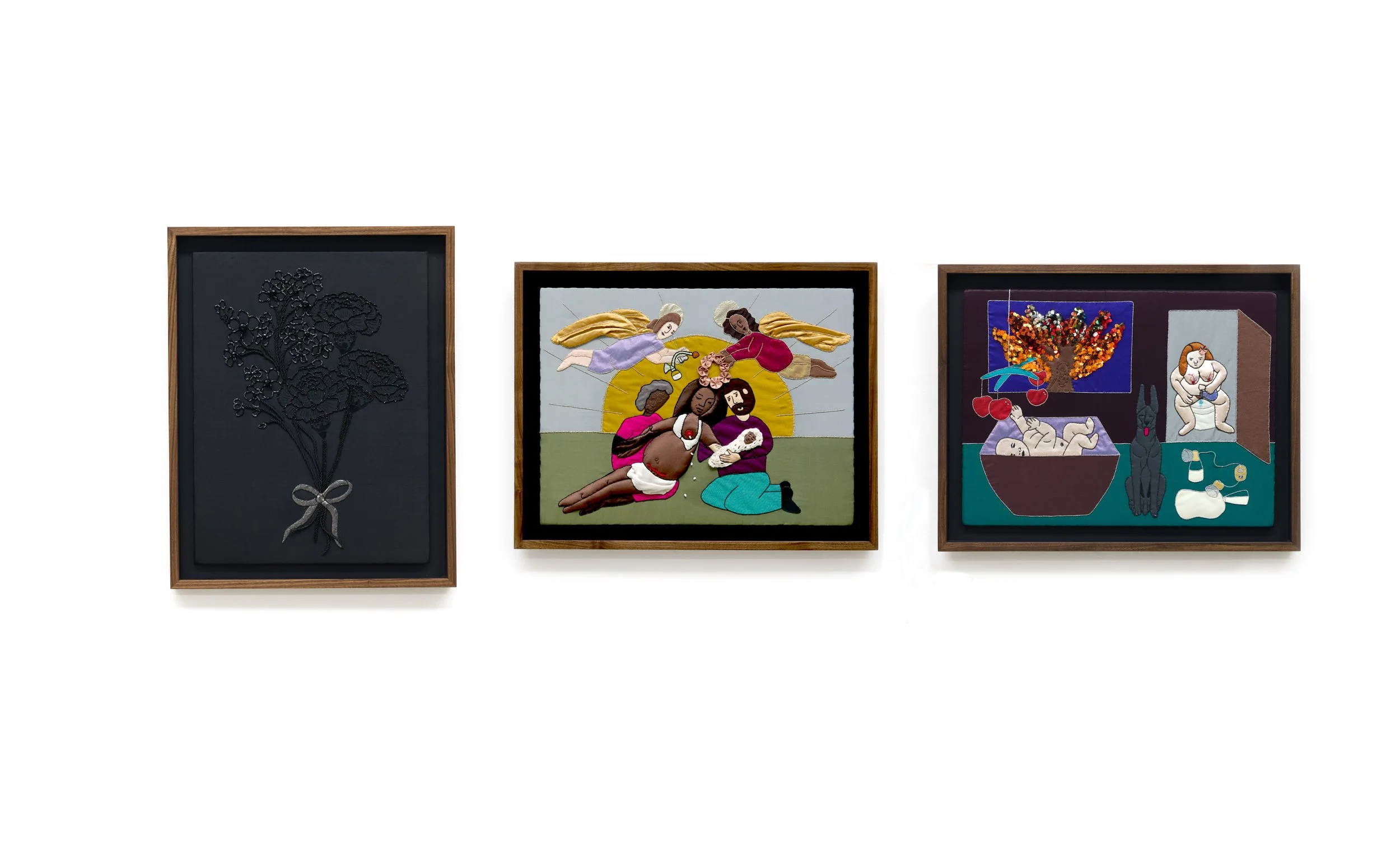


Stations explores matrescence, the profound physical, psychological and social transformation of becoming a mother. Despite being one of life's most significant transitions, matrescence remains a strangely unacknowledged rite of passage in contemporary Western society. The series examines the making and unmaking of the self through motherhood, and the tensions between autonomy and obligation, identity and dependency, love and loss. It questions how maternal identity is shaped not only by individual experience but by deeply embedded cultural expectations of what a mother should be.
The fourteen paintings borrow their narrative structure from the Passion, a familiar story of suffering and sacrifice embedded in Western cultural consciousness. The reference is cultural rather than devotional, providing a recognisable framework through which to examine the sacrifices mothers make, or are expected and compelled to make. The works explore the space between two powerful constructions of motherhood: the medicalisation of pregnancy and childbirth, which can reduce the individual to a body to be managed, and an enduring ideal of maternal devotion founded upon selflessness and sacrifice. Rather than glorifying suffering or presenting mothers as passive victims, Stations questions the social and institutional structures that can undermine maternal autonomy, while recognising the diverse and contradictory experiences of becoming a mother.
Embroidery is integral to the meaning of this series. Historically associated with femininity, domesticity and the often invisible labour of women, it is also a practice inherited by Nelson through generations of women in her family who worked in Northern England's textile industry. The tactile richness and traditionally decorative associations of the medium sit in tension with the paintings' sometimes unsettling subject matter. Yet the works are also infused with wry humour and moments of absurdity, reflecting the strange, surreal and often contradictory realities of pregnancy and motherhood. Humour becomes a means of exposing the gulf between cultural ideals and lived experience, without diminishing the seriousness of the questions raised. Through this interplay of humour, discomfort and painstaking craftsmanship, Stations invites contemplation of what is sacrificed in becoming a mother, why such sacrifice is expected, and what might be reclaimed.
For exhibition proposals, curatorial enquiries or information on the availability of individual works, please get in touch.
The Fourteen Artworks
Note: each artwork is 50cmH x 63cmW x 3.5cmD (with the exception of “Lost” which is portrait orientation) and is made from hand-embroidered textiles and embellishments. Titles and text for each can be viewed on selecting the image
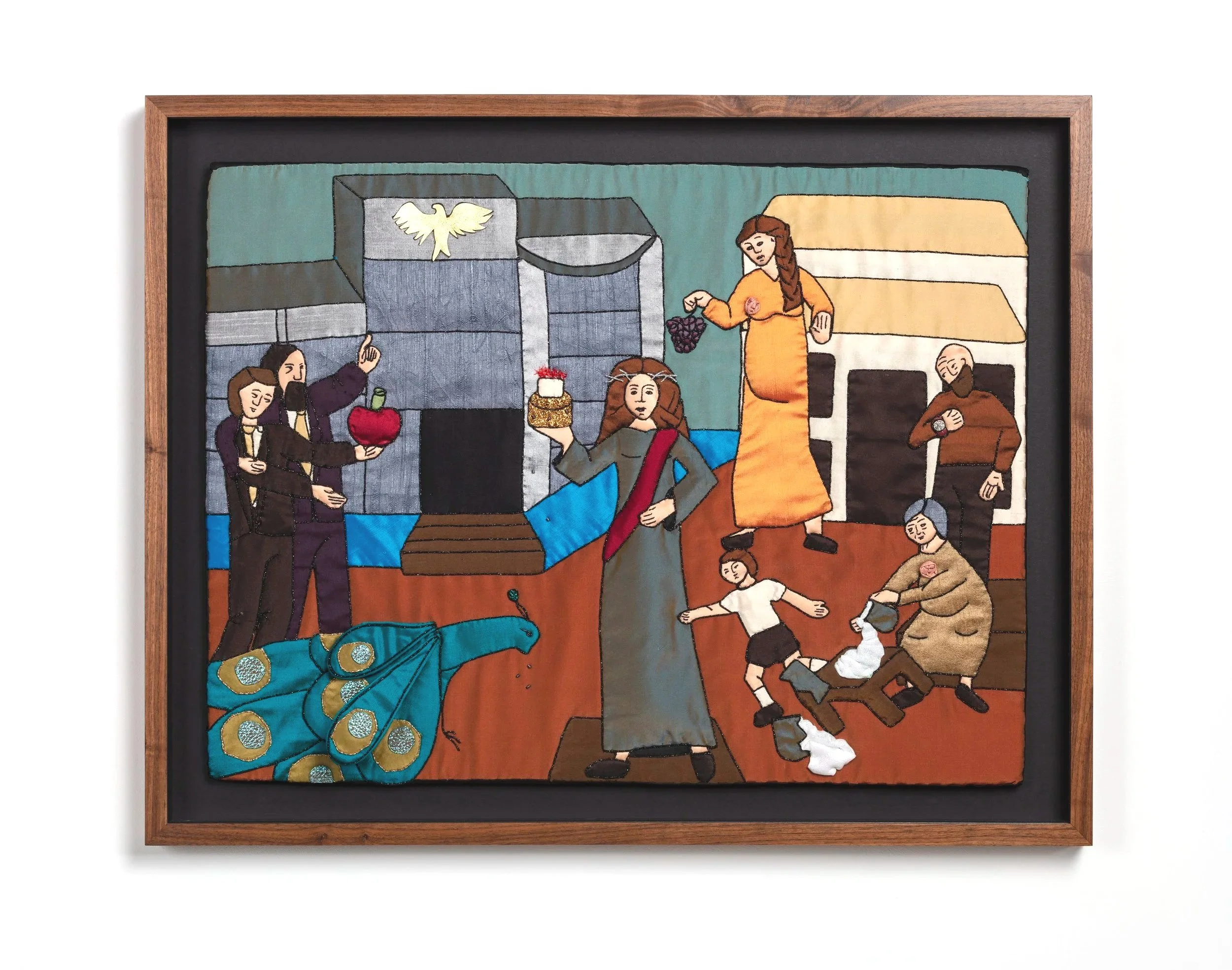
"Judgement" (2024), hand-embroidered textile, 50cm x 63cm x 3.5cm. At the threshold of motherhood, a woman faces competing expectations and judgements. "Judgement" examines the pervasive social pressure to reproduce, particularly as women age, and questions how freely the decision to become a mother can be made.
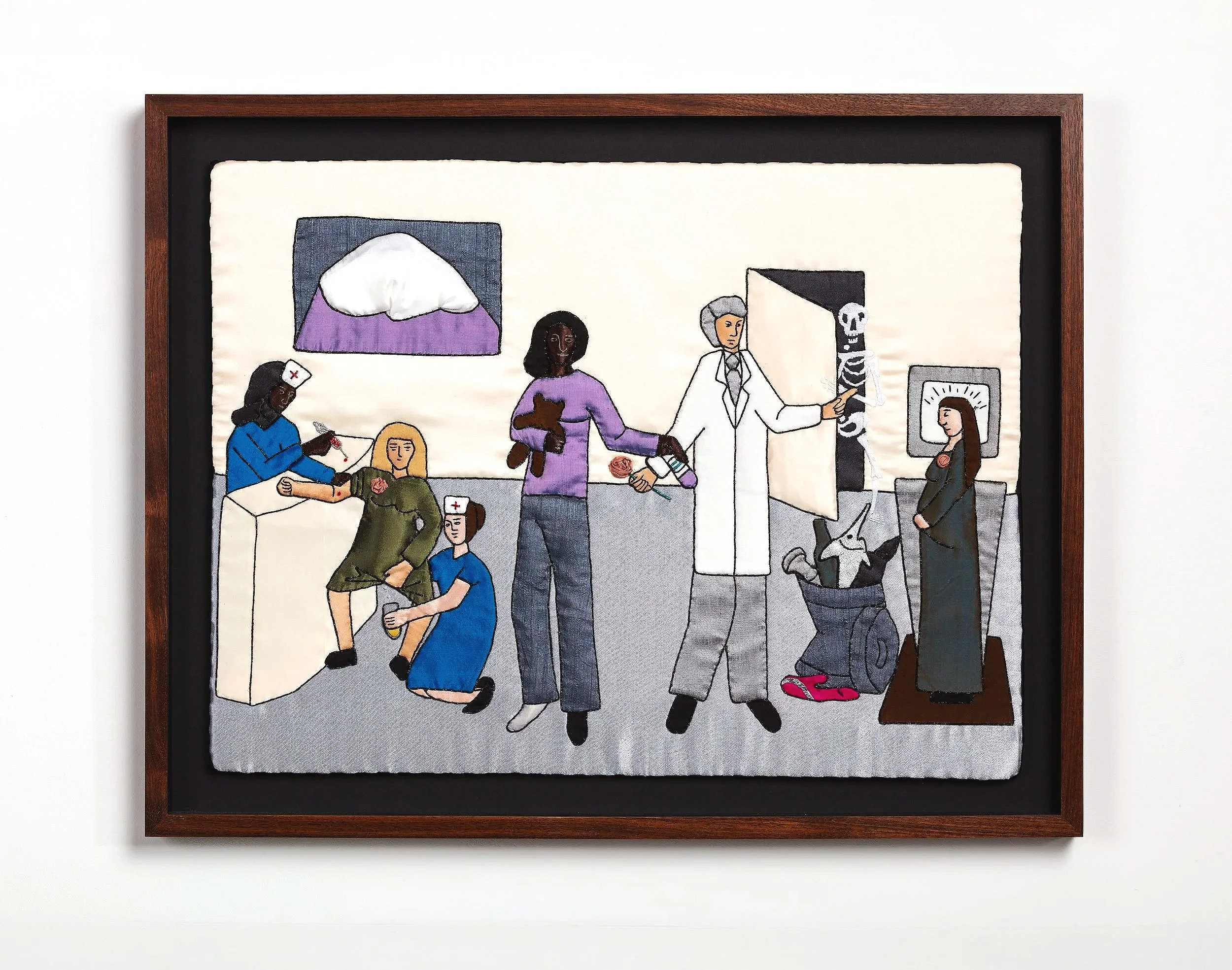
"Burden" (2024), hand-embroidered textile, 50cm x 63cm x 3.5cm. Pregnancy brings a growing burden of medical advice, restrictions and prescribed behaviours. The artwork questions the uneasy relationship between care and control, and the extent to which those entering motherhood are expected to surrender autonomy in the interests of becoming a 'good' mother.
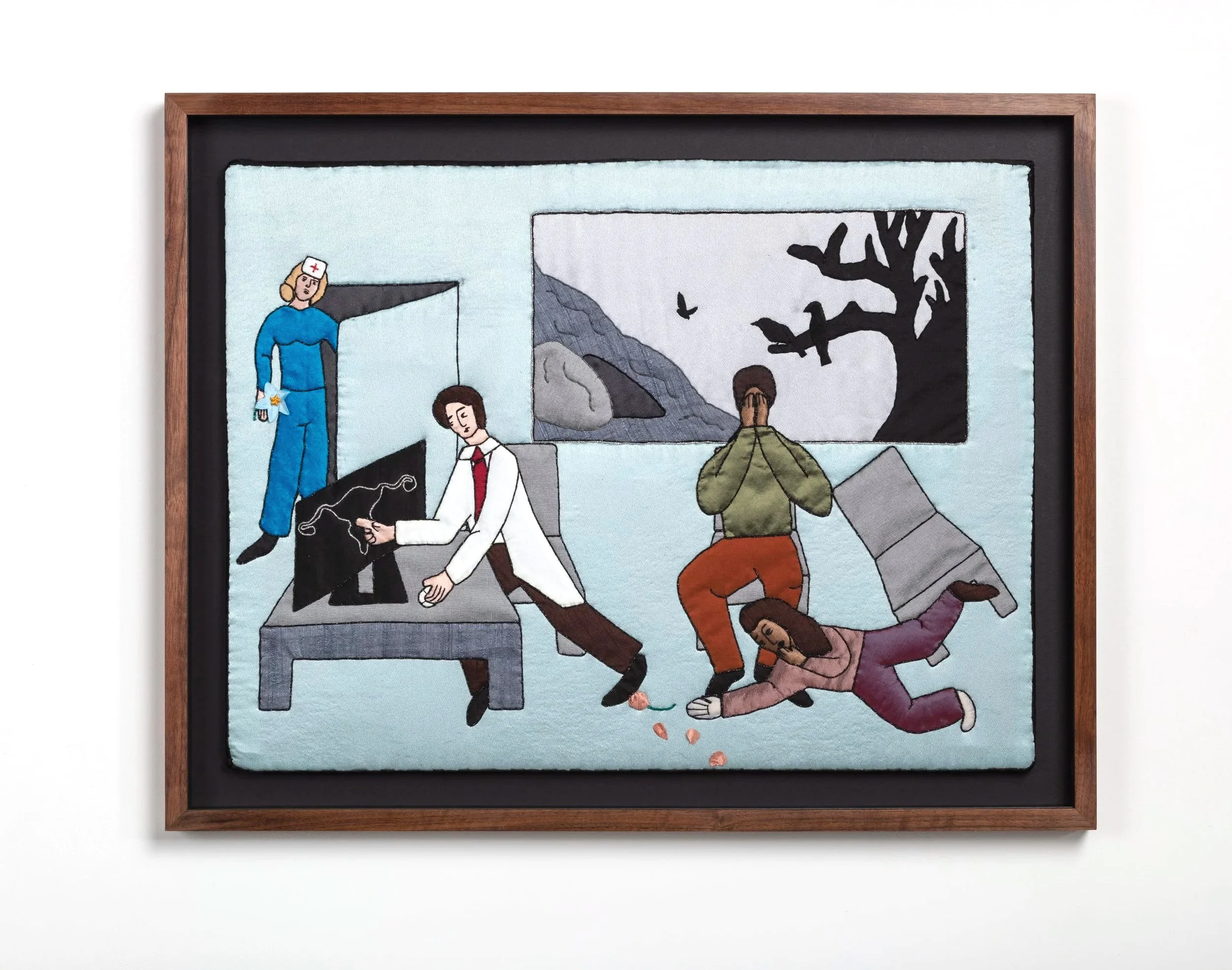
"Fall1" (2024) A woman collapses upon learning that she has miscarried, reaching towards a symbol of the motherhood she had begun to imagine. The artwork gives form to the devastating rupture of an anticipated future and the grief of a loss that is not always publicly acknowledged.
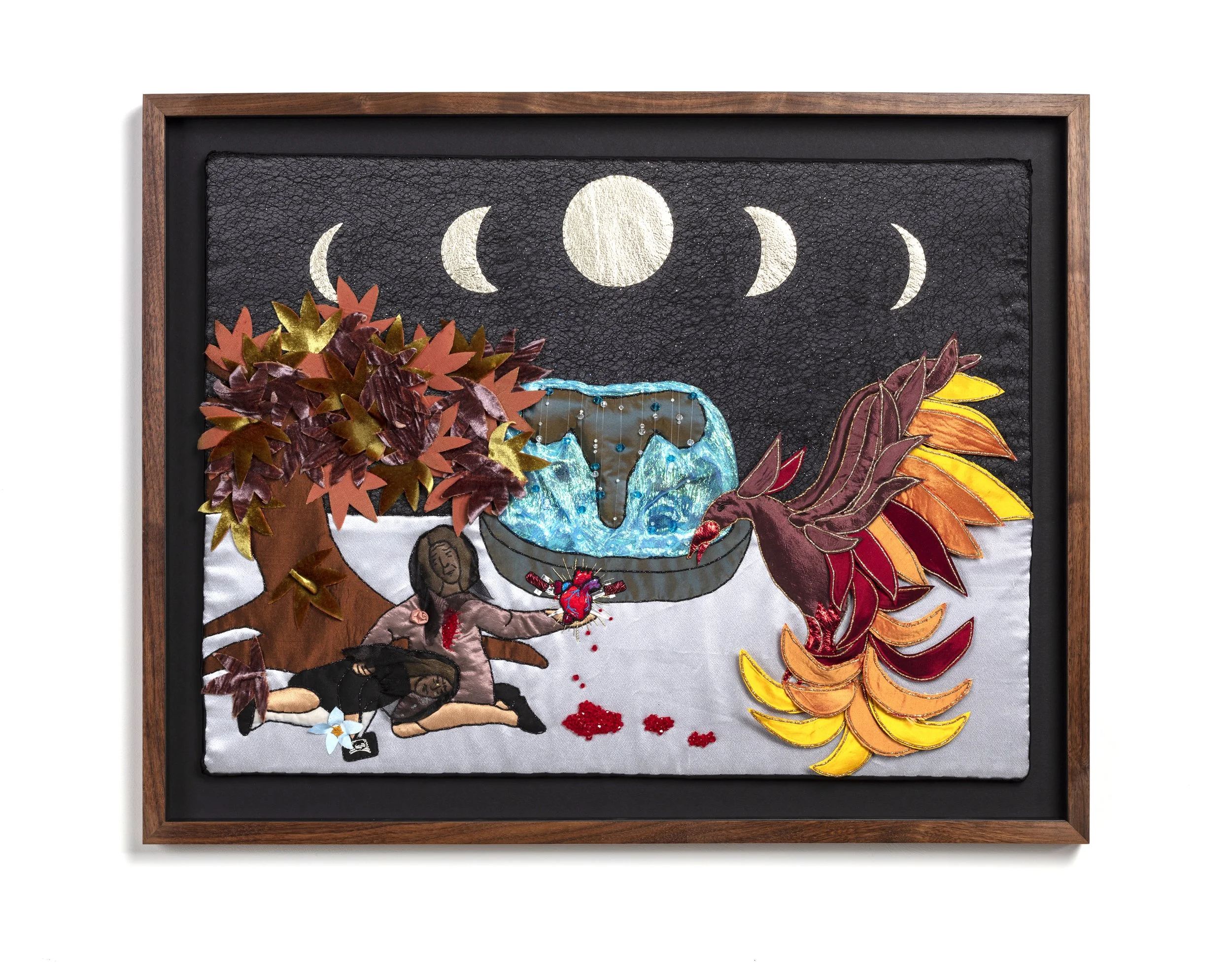
"Tender" (2024) A grieving woman is comforted by her mother as the cycles of time unfold. A phoenix, symbolising renewal, approaches the fountain of youth but is offered the mother's bleeding heart in exchange for healing her daughter's pain. The artwork explores the tenderness, complexity and personal cost of intergenerational maternal care.
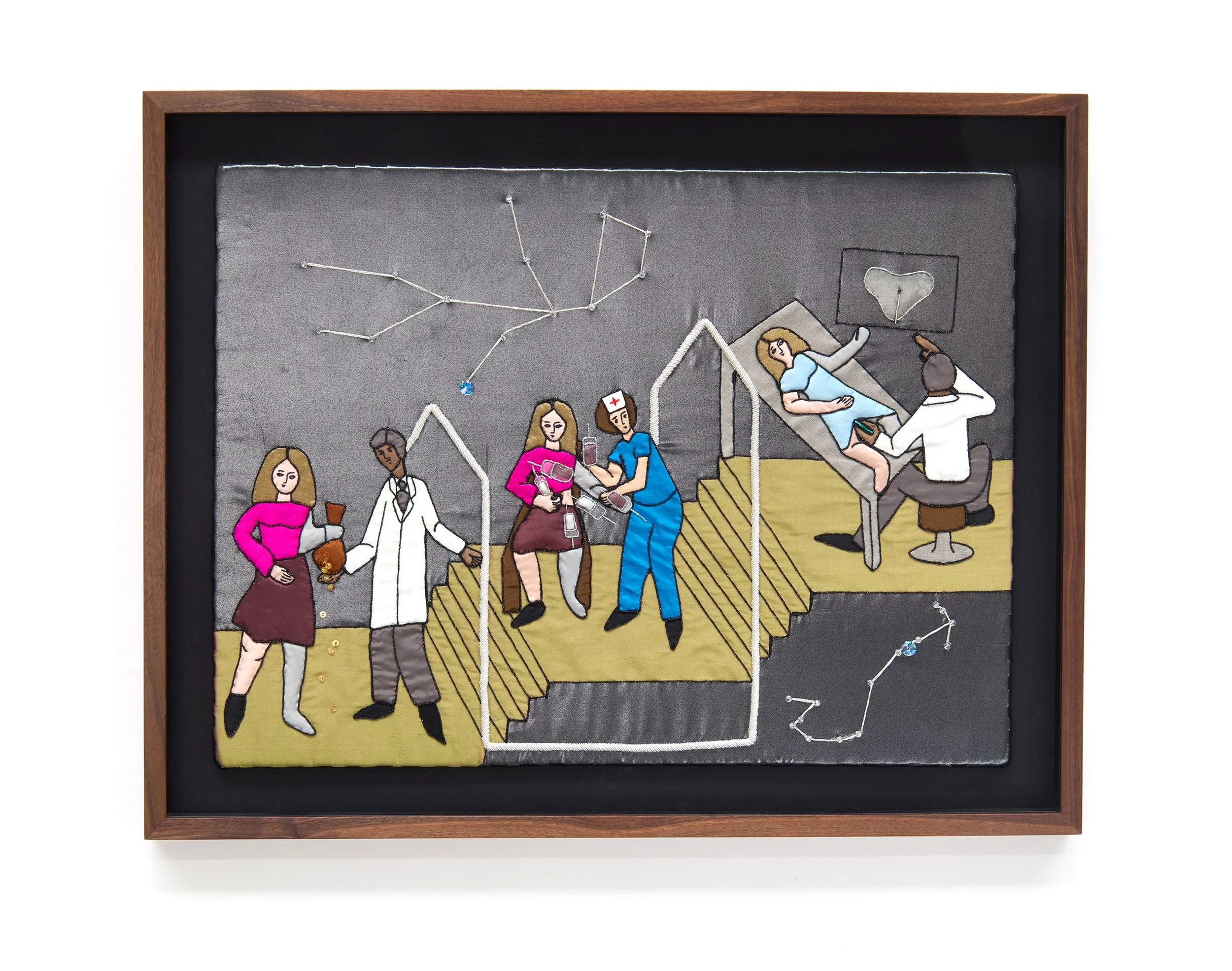
"Dependent" (2025) A woman turns to the medical industry for assistance with fertility, placing her hopes for motherhood in the hands of others. The artwork explores the vulnerability and uncertainty of assisted conception, and the uneasy relationship between dependency, medical intervention and personal autonomy.
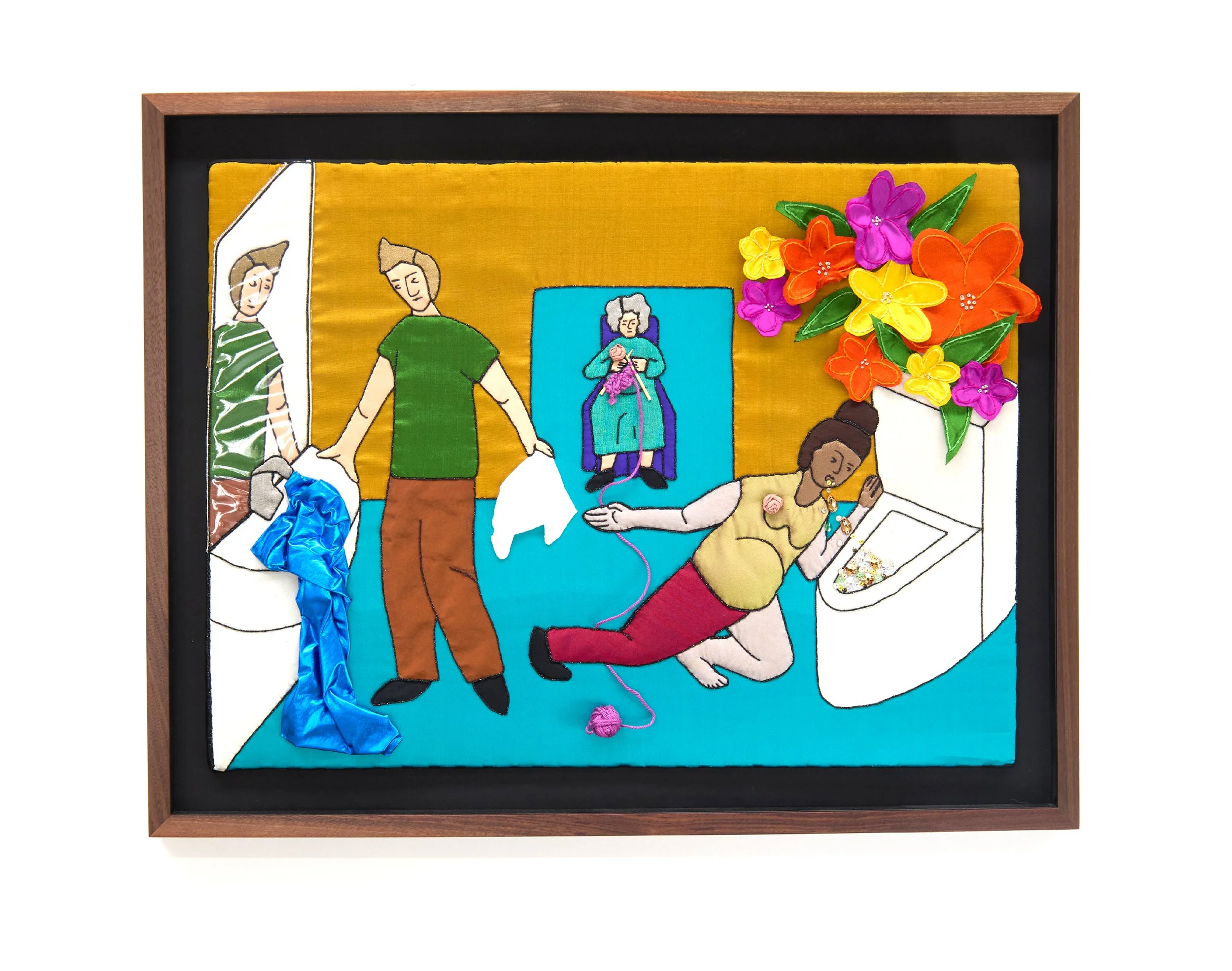
"Miraculous" (2025) Suffering from the debilitating sickness of early pregnancy, a woman looks to her partner for support. The artwork juxtaposes the cultural idealisation of pregnancy as a miraculous experience with its often uncomfortable, undignified and distinctly unglamorous physical reality.
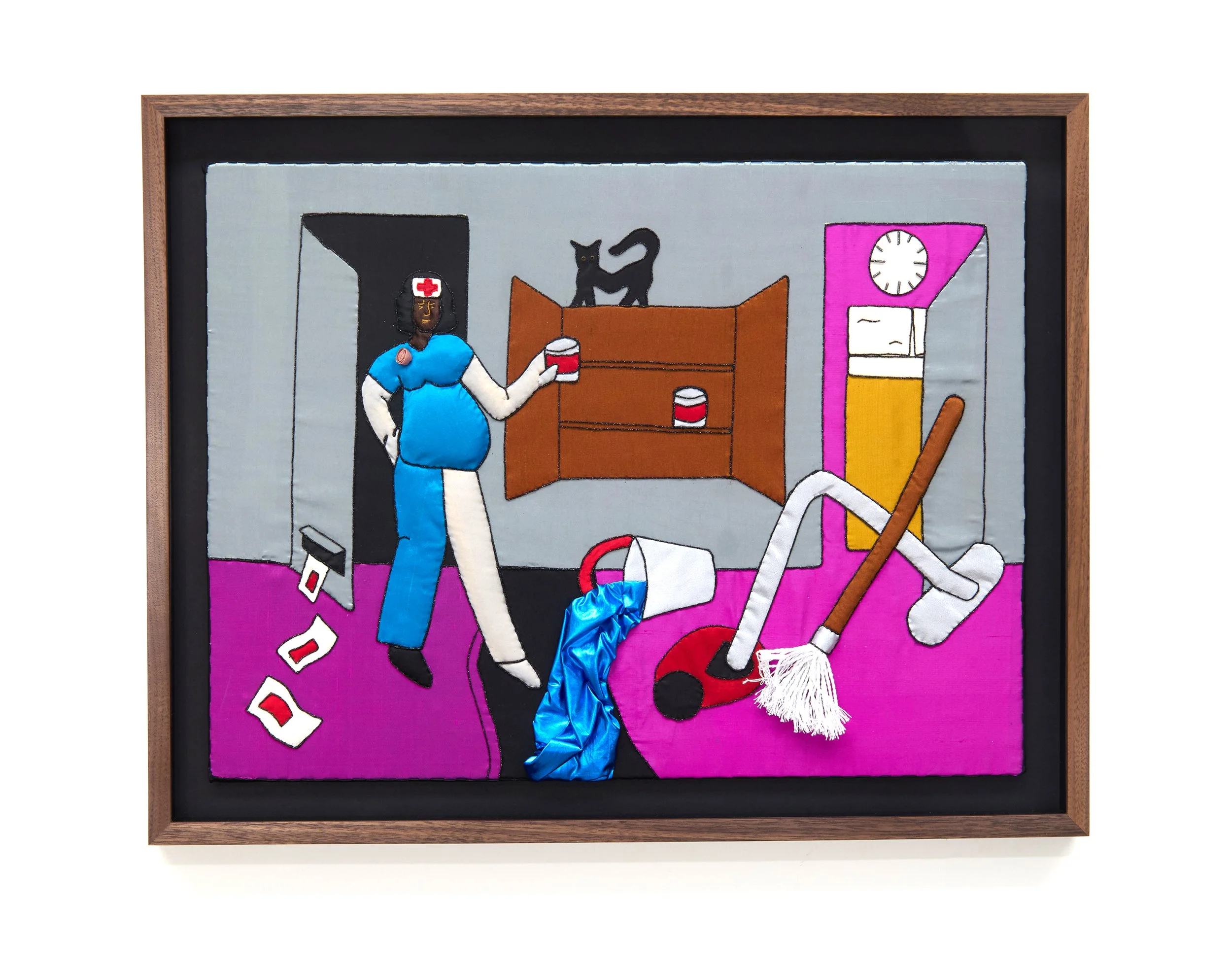
"Fall2" (2025) Exhausted after a day at work, a pregnant woman returns home to empty cupboards and a second shift of domestic labour. The artwork examines the unequal distribution of household responsibilities and the expectation that pregnancy should not diminish one's capacity to fulfil the everyday demands of work and home.
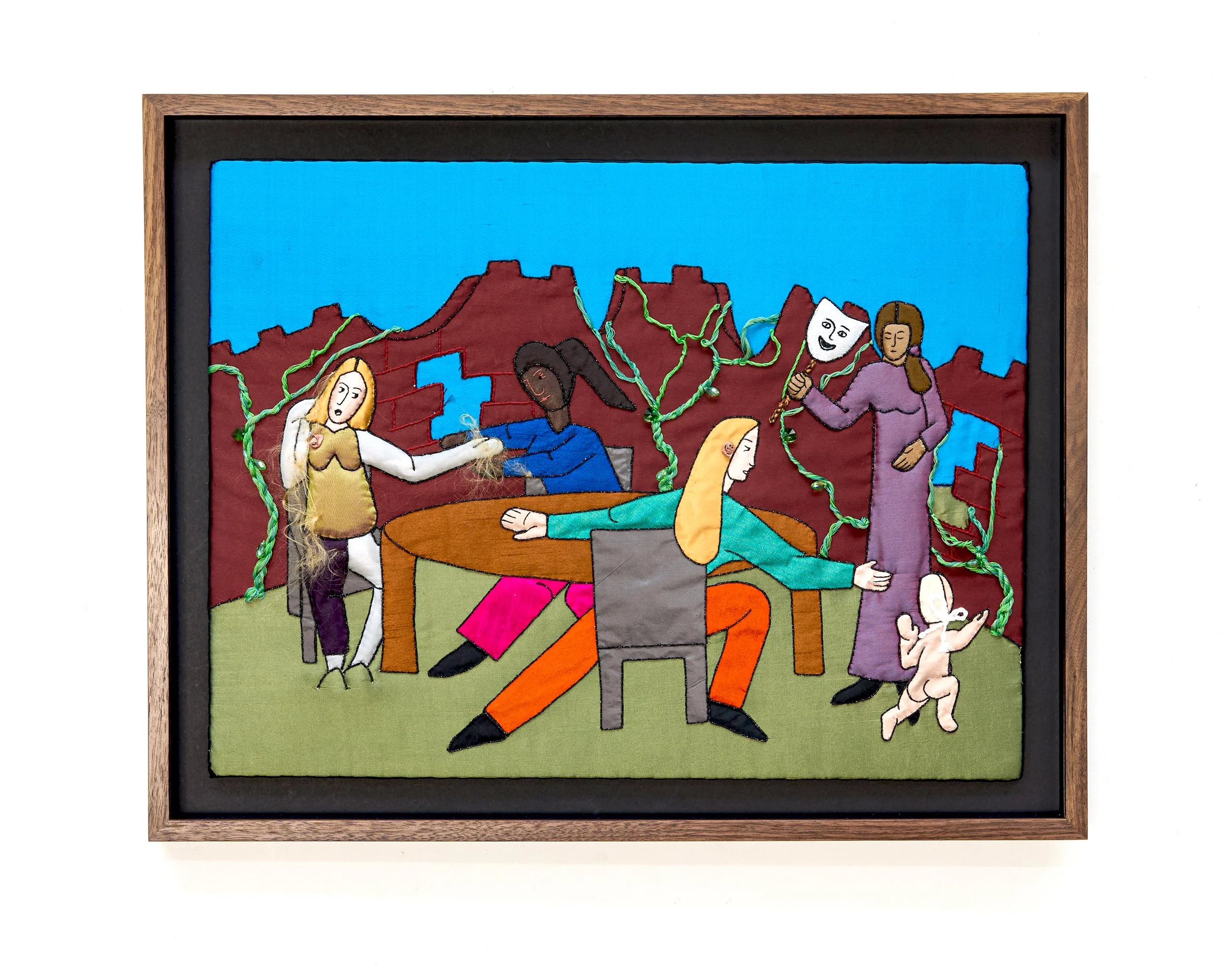
"The Women" (2025) Four friends, each navigating a different relationship with motherhood, come together but struggle to reconcile their individual experiences of longing, fulfilment, grief and care. The artwork explores how the deeply personal nature of reproductive and maternal experience can create unexpected distances between people, even within relationships founded on intimacy and mutual support.
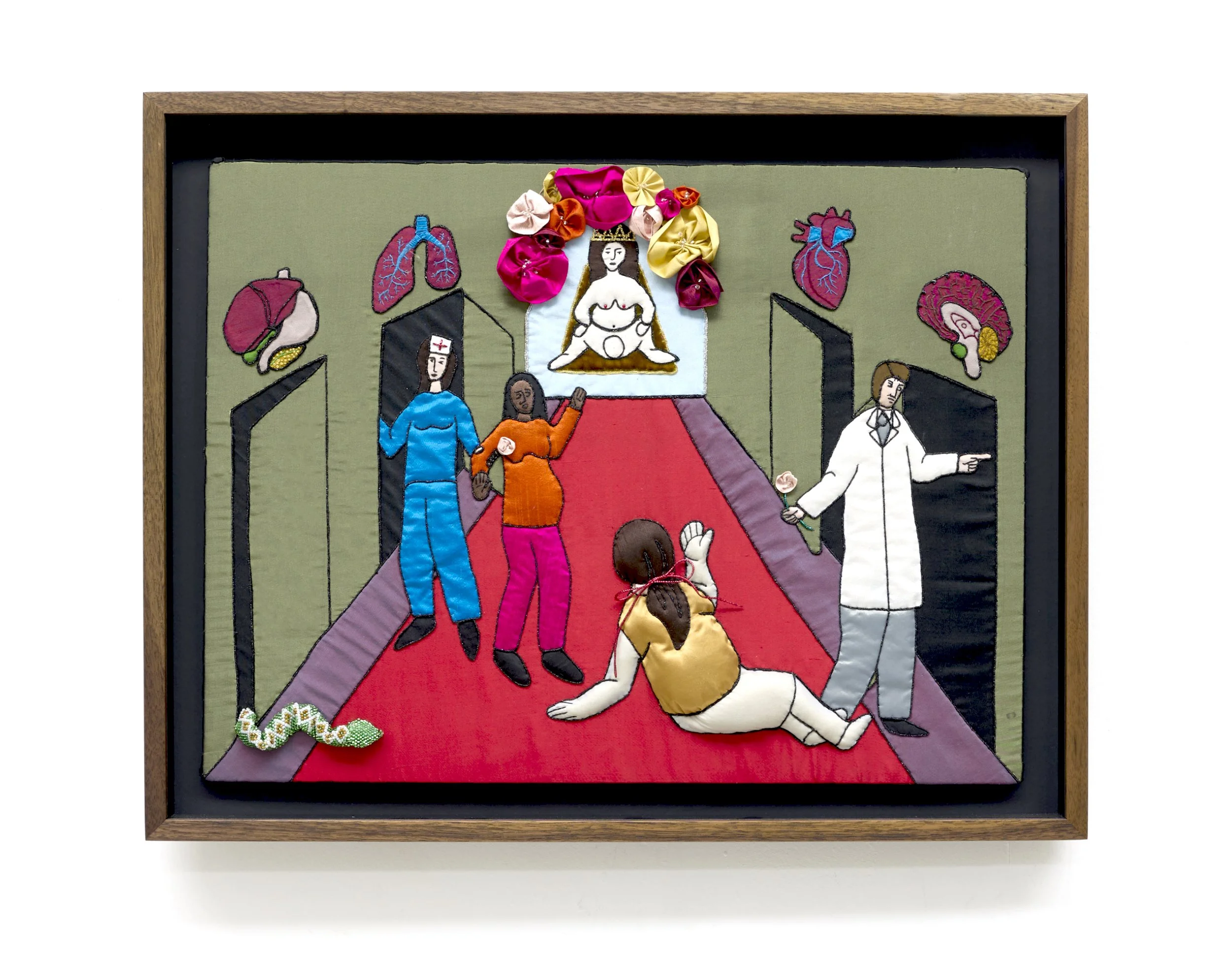
"Fall3" (2026) Pregnant women reach towards an idealised vision of birth and motherhood, only to find themselves falling short of its impossible expectations. The artwork questions a culture in which particular birth experiences are held up as measures of maternal success, leaving those whose journeys take a different course feeling that they have somehow failed.
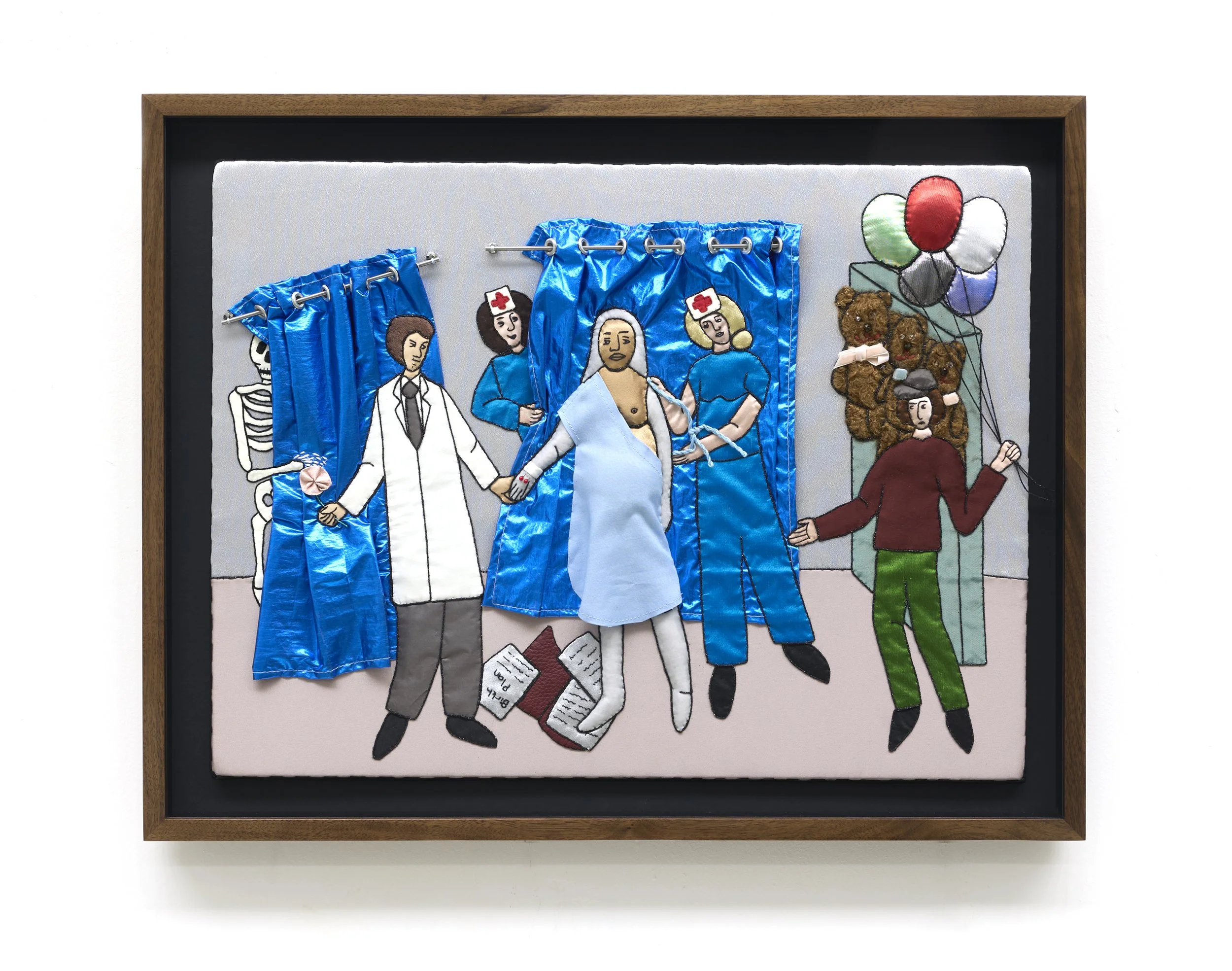
"Stripped" (2026) As she prepares to give birth, a woman is stripped of her clothing, exposing her body to the scrutiny and intervention of others. The artwork considers the vulnerability of childbirth and the shifting boundaries of privacy, dignity and bodily autonomy within the medical environment.
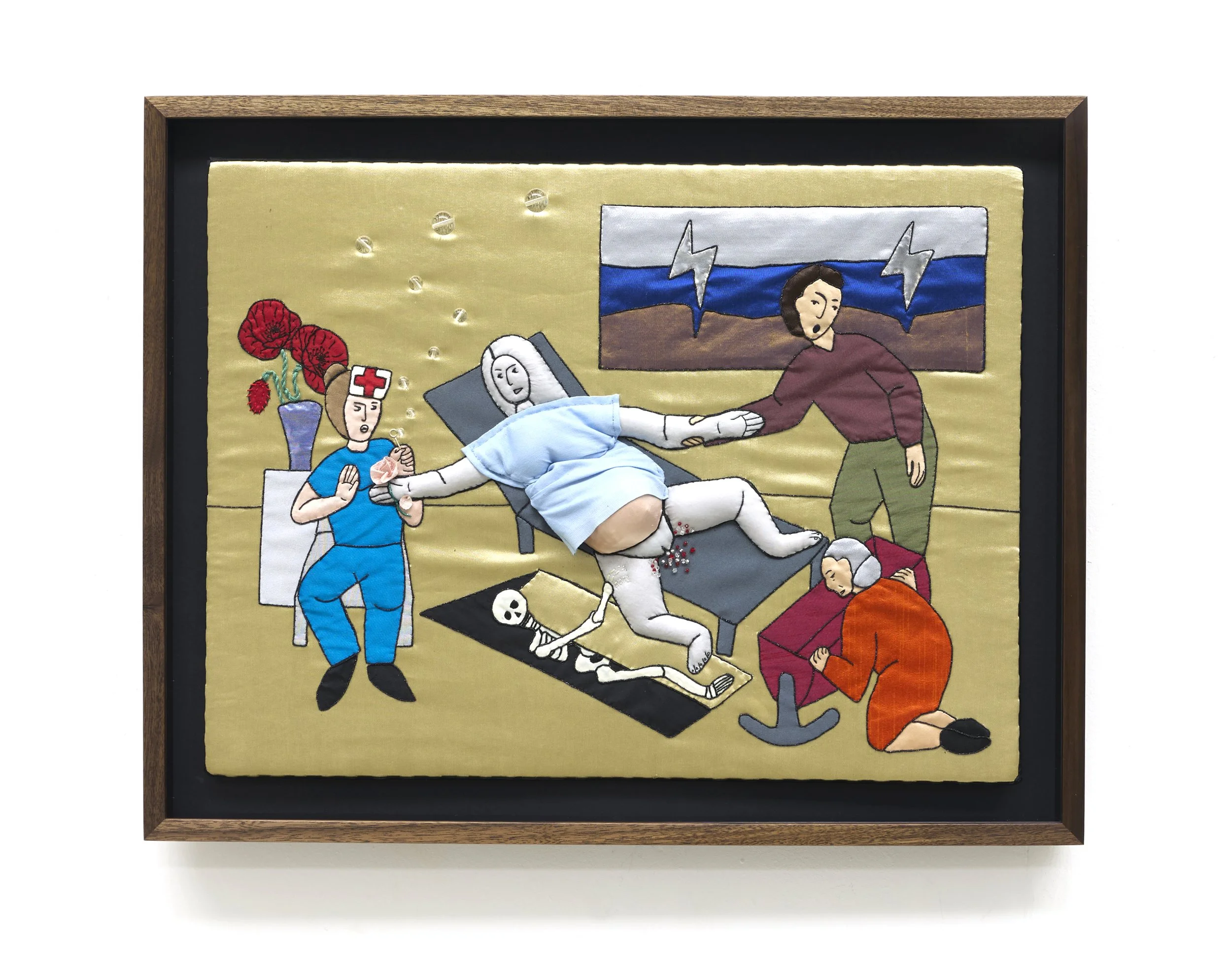
"Restraint" (2026) In the early stages of labour, a woman struggles to retain authority over her body as those around her attempt to manage, direct and contain the birth.. The artwork questions how prescribed ideals of childbirth can conflict with a person's wishes and bodily autonomy.
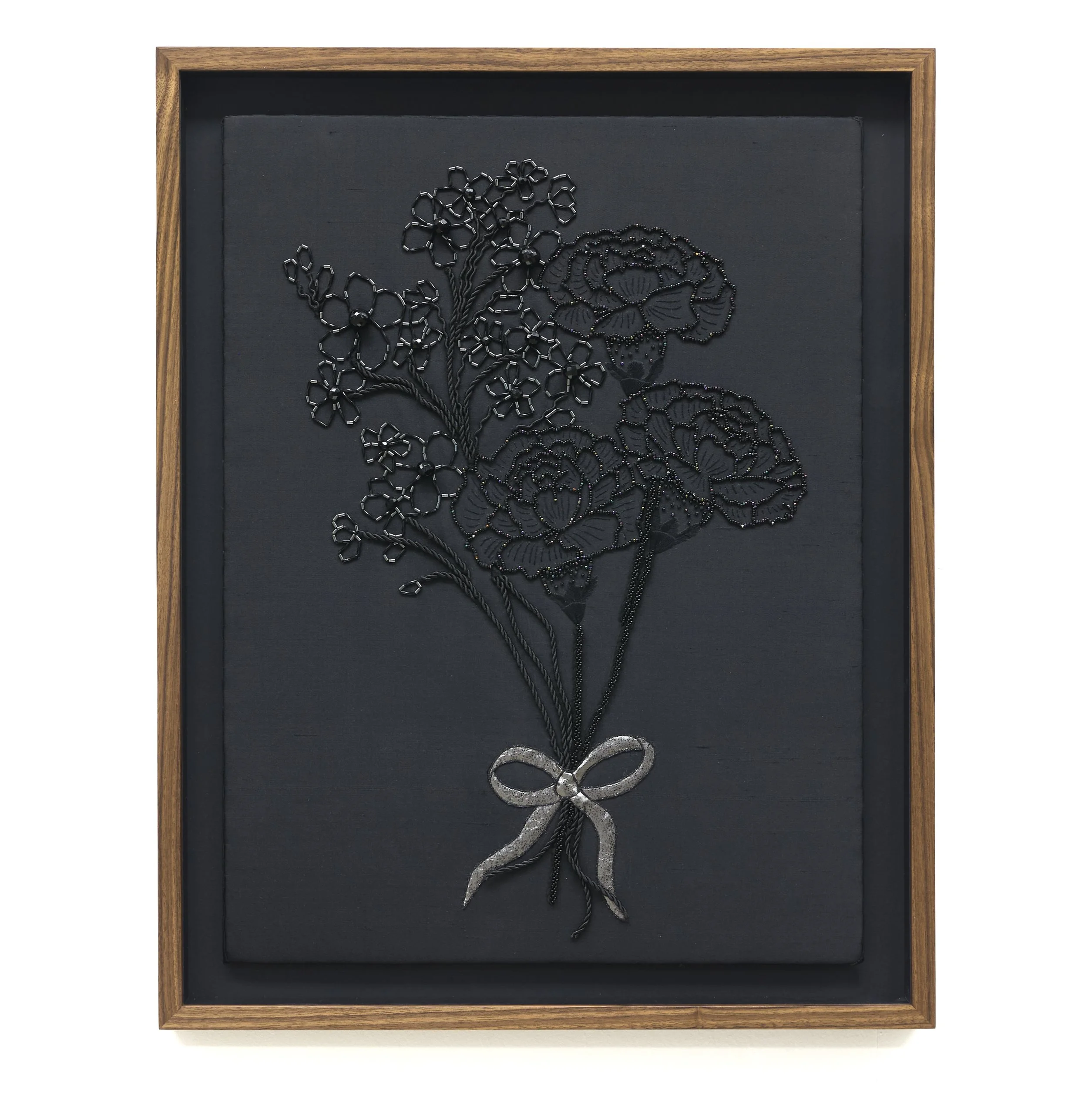
"Lost" (2026) A black silk flag embroidered with forget-me-nots and carnations creates a space for mourning those lost through miscarriage, pregnancy and childbirth. The artwork reflects on the absence of public recognition and opportunities for collective grief, inviting contemplation of losses too often silenced or relegated to the private sphere.
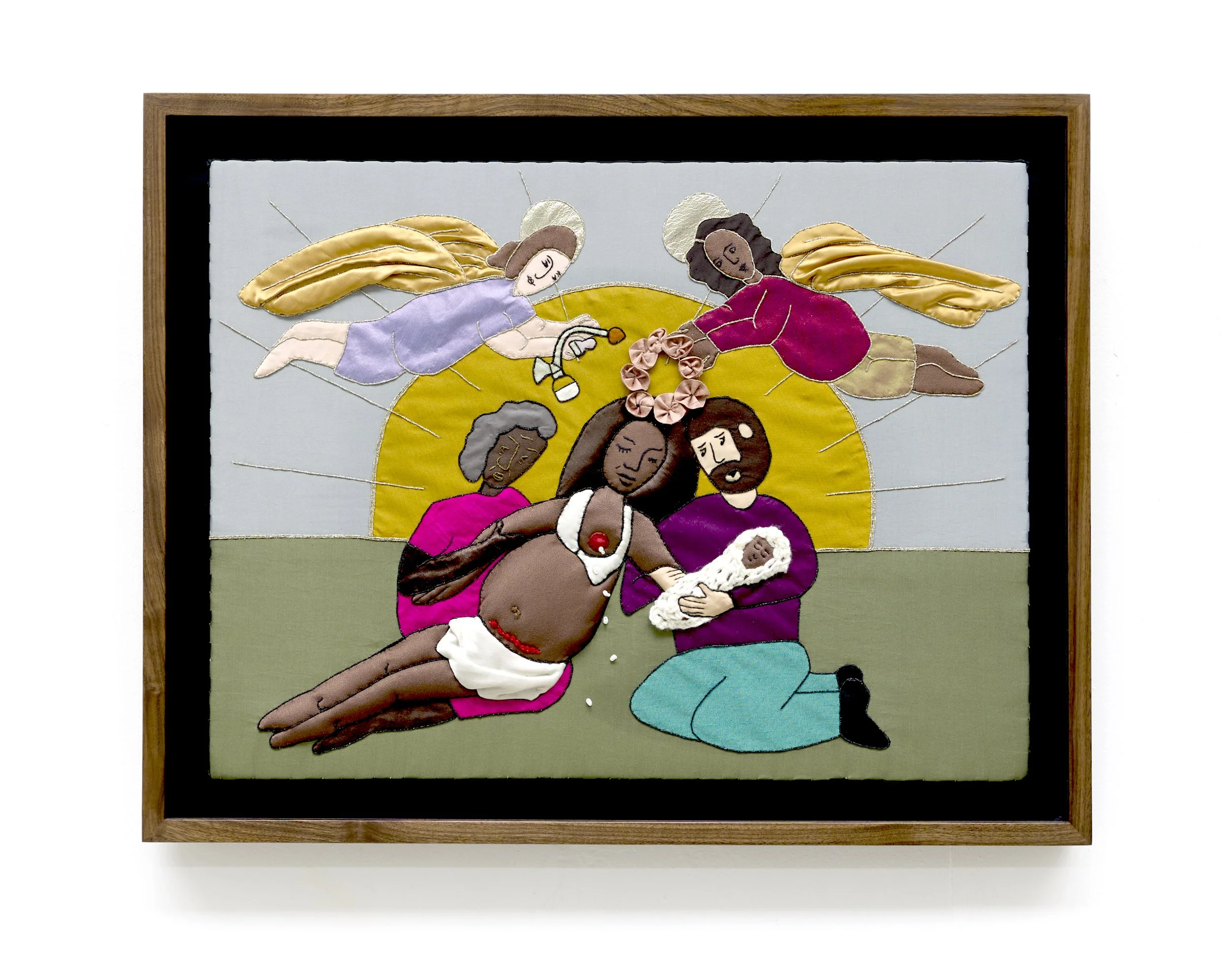
"Gentle" (2026) Held by her mother and her partner, a new mother is supported in the fragile aftermath of birth. Above her, angels extend symbols of motherhood and the burdens that accompany it, suggesting that care, responsibility and loss arrive together. The artwork reflects on the acceptance of a new maternal identity, and the complex interplay of love, support and the weight of what this transformation demands.
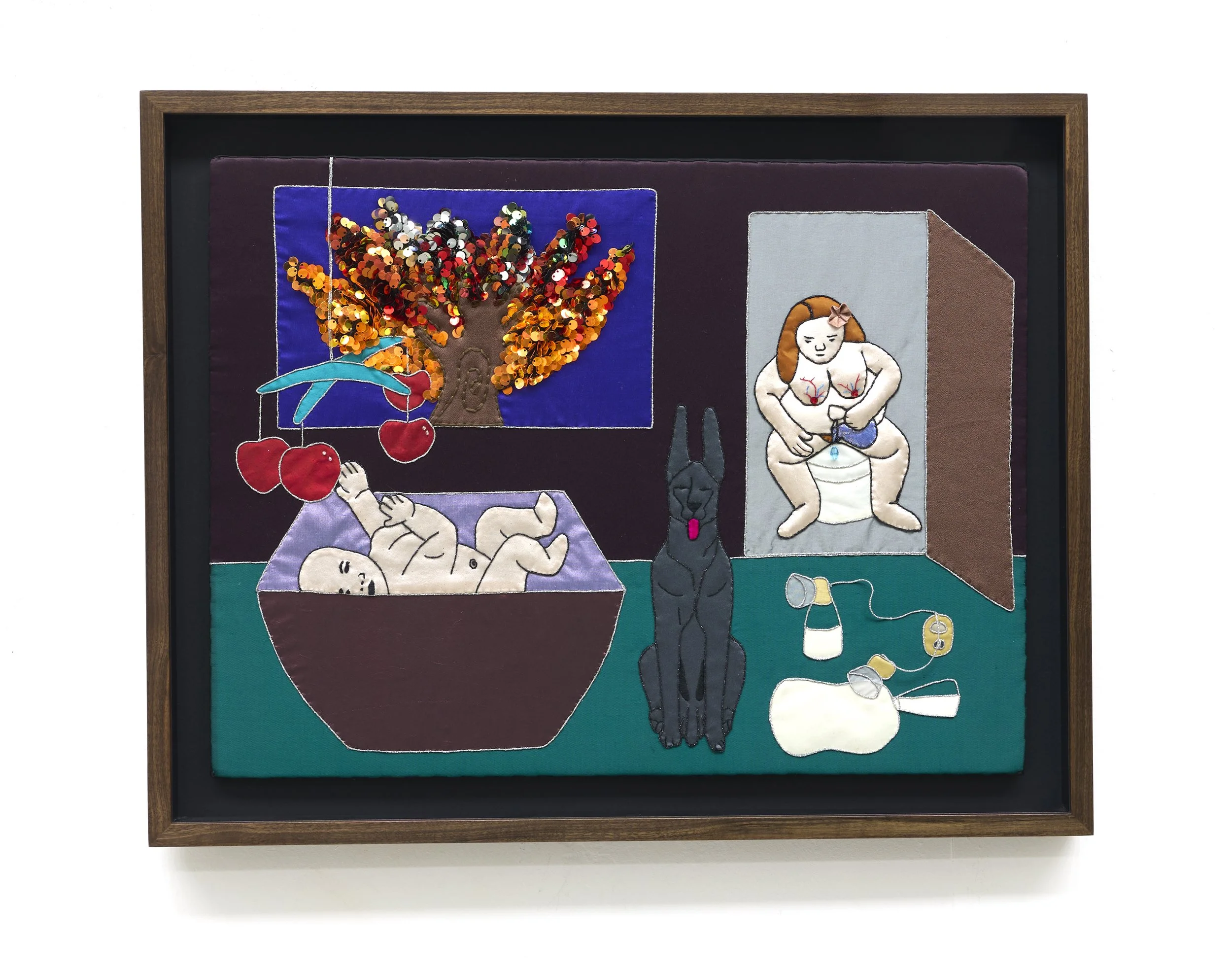
"Tomb" (2026) Alone at home with her newborn, a mother tends to her wounded body while beginning the repetitive, intimate labour of care. Though the scene suggests enclosure and isolation, it also marks the threshold of a new beginning. The painting reflects on the strange solitude of early motherhood, where bodily recovery, tenderness, vigilance and estrangement exist side by side.